Habit Tracker Guide
Everything you need to know about habits and habit trackers - and why the Goals-First approach makes all the difference.

What Is a Habit Tracker?
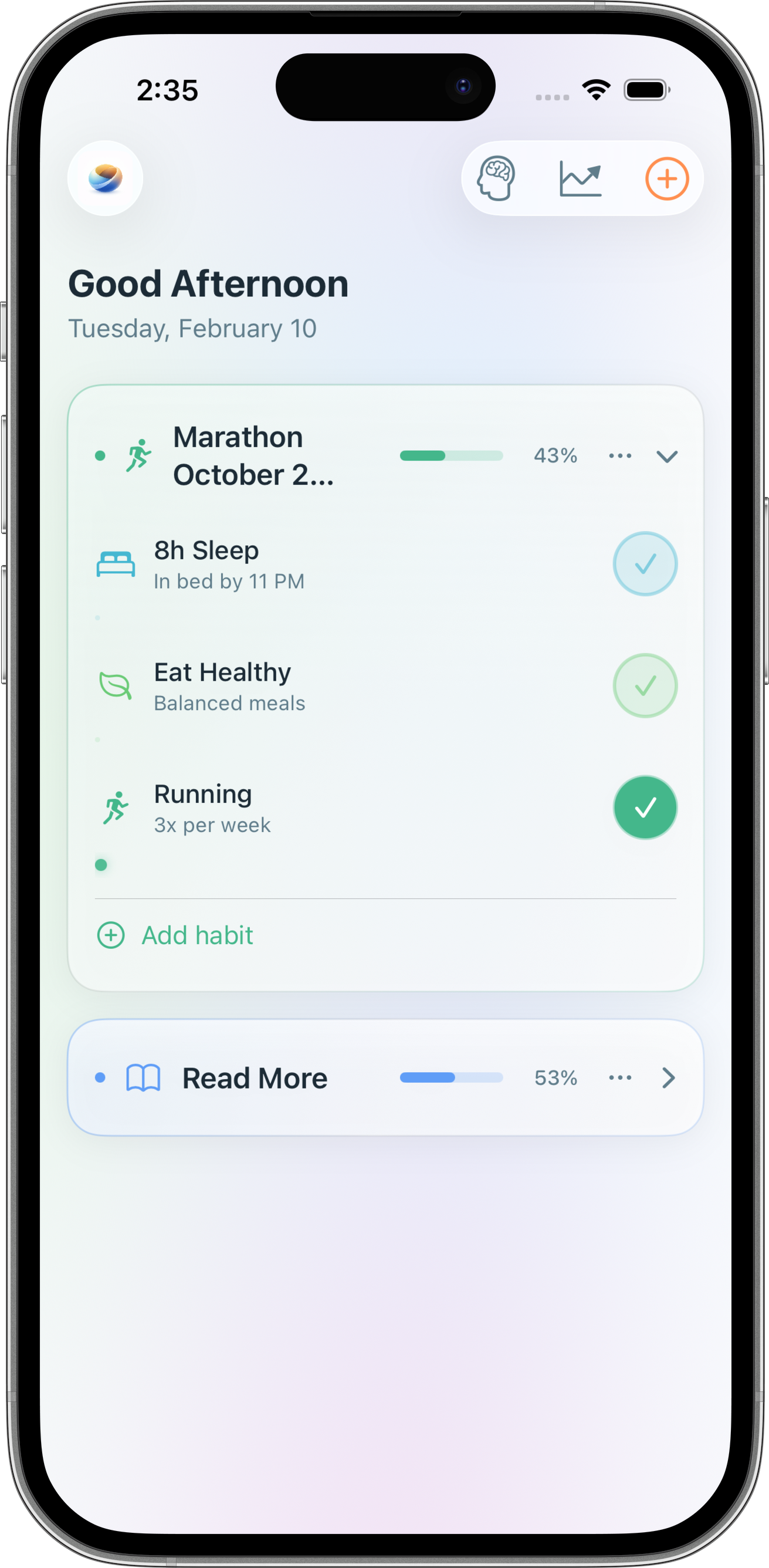
A habit tracker is a tool that helps you monitor and visualize your daily habits. The principle is simple: you define which habits you want to build, and mark each day whether and how intensely you performed them.
The goal is creating awareness of your behavior. Studies show that simply recording a habit increases the likelihood of following through. This principle is called 'Self-Monitoring' and is one of the most effective methods for behavior change.
Modern habit trackers go far beyond simple checklists. They offer flexible intensity scales, automatic tracking via HealthKit, voice notes, and intelligent analytics - all aimed at giving you a realistic picture of your progress.
The Psychology Behind Habits
Habits form through the so-called Habit Loop: A trigger (Cue) leads to a routine, which is reinforced by a reward. Understanding this cycle is the key to sustainable change.
For people with ADHD, this process is particularly challenging. Rejection Sensitive Dysphoria (RSD) can cause a missed day to feel like personal failure, not just a minor annoyance. That matters when choosing a tracker: pick one that normalizes breaks rather than punishing them.
Research shows: Progress isn't linear. There are good and bad days, and that's perfectly normal. A good habit tracker celebrates small steps too and shows you the big picture - not just individual missed days.
Digital vs. Analog: Which Tracker Fits You?
Analog trackers like bullet journals have their charm: they're tactile, creative, and don't need a smartphone. However, they lack automatic analysis, reminders, and the ability to recognize trends over months.
Digital trackers offer clear advantages: automatic HealthKit tracking, intelligent analytics, Apple Watch integration, and voice notes. The decisive factor, however, is privacy - not every app treats your personal data equally.
The best solution depends on your needs. If you value privacy, ADHD-friendly design, and a Goals-First philosophy, a specialized app is the right choice.
The Goals-First Approach
Most habit trackers treat habits as ends in themselves. You track 'Meditation' or 'Reading' without a clear connection to your life goals. This often leads to motivation fading after a few weeks.
The Goals-First approach flips this logic: First you define what you want to achieve (e.g., 'Less Stress'), then you assign habits that serve this goal (Meditation, Exercise, Journaling). Each habit gets a weight showing how strongly it contributes to the goal.
This approach gives every habit meaning. When you know why you're doing something, you stick with it longer. The 'Why' is the strongest motivator - stronger than any streak counter.
What to Look For When Choosing
Privacy should come first. Your habits are sensitive data - make sure the app stores your data locally and doesn't send it to servers.
ADHD-friendliness isn't a niche feature, it's good design for everyone. Look for supportive language, flexible streaks (that forgive a missed day), and an intensity scale instead of binary tracking.
Flexibility in scheduling matters: Not every habit needs to be daily. Weekly or custom schedules make tracking realistic instead of stressful.
Tips for Sustainable Habits
Start small. A single habit at low intensity is more valuable than five ambitious ones that get dropped after a week. Build up slowly.
Connect habits to existing routines (Habit Stacking): 'After brushing my teeth, I meditate for 2 minutes.' This linkage uses existing neural pathways.
Be forgiving with yourself. Breaks are part of the journey. A missed day isn't failure - it's a normal part of the process. Tomorrow is a new beginning.
Continue Reading
How to Build Habits
Practical tips for sustainable habits.
→ADHD & Habits
Habit tracking designed for ADHD brains.
→Morning Routine
Your morning routine - at your pace.
→Habit Ideas
Over 50 habit ideas sorted by goals.
→Streaks Without Stress
How streaks can motivate instead of stress.
→Habit Tracker for Students
Build study routines and achieve goals.
→Frequently Asked Questions
Ready to sustainably change your habits?
DopaLoop combines Goals-First with Privacy-First. Start your journey - 14 days free.